Pages

Wednesday, March 15, 2006

Signed Baseball Basics

As baseball season draws near, I thought some signed baseball information might come in handy.

What To Get Signed
Always try to use the Official Major League Baseballs.


These balls are leather and typically cost around $12 each. Before they started using the same ball for both leagues several years ago, they used to have different balls for the American and National Leagues. Each ball was imprinted with the signature of the respective League President. So, it was always best to have a player sign the ball that was specific to the league he played in. For instance, you'd have Hank Aaron sign a National League ball and Mickey Mantle sign an American League ball. Now that there is only one ball for both leagues (imprinted with the signature of the Commissioner), it's a moot point for contemporary players.

Avoid "Official League Balls."


These look like the real deal, but they may have a synthetic cover and cost around $5 each. Signatures on these balls will fade and/or bleed over time.

Use a medium point blue ballpoint pen. Try to find a pen that leaves a nice dark, blue line. Bics with the white barrel are my favorites. Avoid superfine ballpoints that leave a thin weak line.

Why Do Some Baseballs Develop Brown/Yellow Spots?
The leather in the ball contains various acids and chemicals that may or may not turn dark with time.

Baseballs should be stored in a dark and dry environment. But, even under the best conditions, the inherent acids/chemicals in some balls will create dark spots over time. This is a ticking time bomb in some balls and there is NOTHING you can do about it.

In my experience, the dark spots will usually appear in the first 10 years after manufacture. If a ball makes it past 10 years old and has no spots, it will probably remain okay.

This is why I shy away from getting balls signed, especially from today's high-priced signers. Who wants to invest a few hundred bucks in a signed ball and have it self-destruct in a few years?

Friday, March 03, 2006

Superman's Cape In Strikezone Auction

From eSCD, 3/2/2006:

Items relating to sports heroes Mickey Mantle, Lou Gehrig, Jim Brown and Rick Barry were among the top sellers at the January auction for Broadway Rick’s Strike Zone, but it was a superhero’s cape that stole the show. A red cape worn by George Reeves in the 1950s “Superman” TV series sold for $22,226 (with buyer’s premium) to capture the top honors in the auction.

The rare cape had been on display for more than a decade at the Superman Museum in Metropolis, Ill. It was given to the museum by Whitney Ellsworth, the director of the TV series. The auction generated more than $970,000 in sales, the largest in company history. A dozen other items sold for five figures in the auction, paced by a rare game-used Brown jersey that sold for $26,893. Mantle’s signed 1959 contract with the Yankees garnered $18,521. Meanwhile, a Gehrig game-used bat checked in at $18,306 and a Pee Wee Reese game-used Dodgers jersey sold for $17,259.

Monday, February 27, 2006

Dennis Weaver Rides Into The Sunset

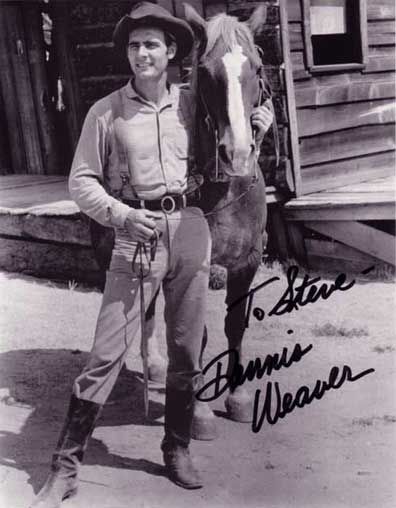
As regular readers may have deduced, I am a big fan of the television show, Gunsmoke... especially the earlier -- and much grittier -- black and white episodes. So, it was with great sadness that I heard of the death of Dennis Weaver.

Mr. Weaver superbly played Chester Goode, Marshal Dillon's simple, yet honest and loyal, assistant. The media mistakenly reports that Chester was Marshal Dillon's deputy; this is not true. Chester was never deputized and typically did not carry a gun. He simply helped the marshal and was his friend... not a deputy.

Dennis Weaver went on to a very successful TV and movie career, and I enjoyed watching him introduce movies on the Western Channel.

Here is a signed photo (as Chester) I obtained directly from Dennis Weaver several years ago.

Image hosting by Photobucket

Thursday, February 23, 2006

UACC Suspends Two Registered Dealers

From the UACC Website:

The UACC Registered Dealer Review Committee has fielded complaints and has suspended two from the Registered Dealer Program. Permanent suspension was handed down to Myron Ross and his company, 'Heroes & Legends', who were RD018. A one year suspension was given to Robert L. Polk Autographs, who is RD041.

Friday, February 17, 2006

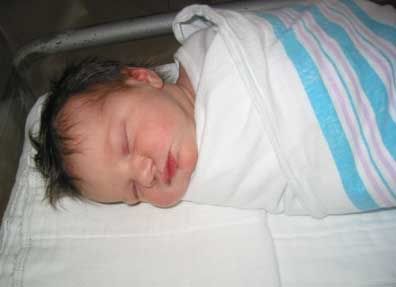
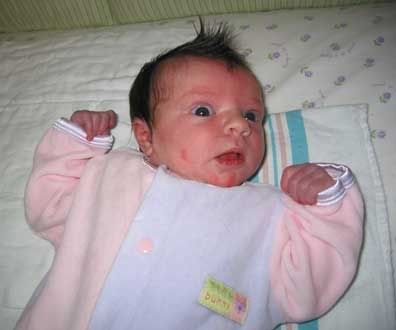
My GEM MINT 10.0

I haven't posted here or much on any message boards in the past week or so, but I have a good excuse.

She arrived at 9:58 pm on Friday February 10.


Image hosting by Photobucket


Image hosting by Photobucket

Tuesday, January 31, 2006

Superman To The Rescue

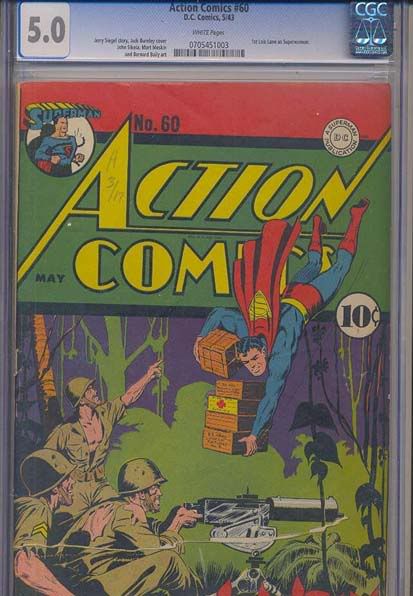
I'm happy to report that I crossed one more issue off the Action Comics WWII Cover want list.

Action Comics #60 with White Pages. It really is a great looking 5.0. I suspect the staple tear is what reduced the grade, because otherwise the book presents much nicer than most 5.0s.

Interestingly, I am the second owner of this book. It was obtained from an original owner collection in San Diego. The collection contained many other Actions, but I missed out on those other issues by one day.

Image hosting by Photobucket

Monday, January 30, 2006

Much Ado About Spidey's New Costume

So, whaddaya think of Spidey's new getup?


I'm not getting too worked up over it because it's an obvious and transparent publicity stunt... and I'm not going to get suckered in.

No one, including Marvel, really likes this new costume. In fact, I'd bet that they intentionally made it an ugly piece of crap to ensure maximum fan reaction.

They have ZERO intention of using this costume for more than 6 - 8 months. They are banking on the hub-bub with the costume change and they are banking on the hub-bub when he goes back to the original costume. If they get lucky, it'll be a slow news day on either end of the cycle and they might get a little play on the evening news broadcasts or CNN.

Think of it as "The Death of Superman Lite."

Friday, January 20, 2006

HBO Report Critical of Autograph Authenticators

From the January 19th edition of eSCD...

At least my good pal Richard Simon was one of the authenticators identified as getting it right...

#####

HBO's Real Sports documentary series took a look at the sports autograph industry Tuesday night, with a specific focus on autograph authenticators and questioned their ability to spot fake merchandise.

Reporter Armen Keteyian began the story by claiming that as much as half the signed memorabilia being sold online today is fake, and outlined how the FBI's Operation Bullpen program has helped arrest and convict forgers and distributors of more than a million items of fake memorabilia. One of those convicted, Sheldon Jaffe, who was identified on the program only as "Eddie," said one of the reasons forgery rings like the extensive operation headed by the Greg Marino family were able to move their merchandise so easily were certificates of authenticity that were signed by third-party authenticators.

"This was a scam like no other," Jaffe said in regards to the concept of COAs. "The only reason the forgery ring worked was we were able to find 'forensic experts.'"

Donald Frangipanni was spotlighted as the "authenticator of choice" for the forgers. Jaffe acknowledged that if they had a fake document and wanted someone to approve it, it would be directed to Frangipani. An HBO staffer with a hidden camera then took seven items with signatures from athletes such as Mickey Mantle, Joe DiMaggio and Brett Favre to Frangipani's office for authentication. He approved all of the items. When confronted by HBO, Frangipani said he was simply fooled by the forgeries. "I gave my opinion on these items," he said. "If I made errors, I admit to my errors."

HBO sent the same items to six other authenticators. The report stated that four of the six "failed miserably," authenticating 15 of the 20 fake items as being real. None of those four authenticators were identified. The network said two unnamed authenticators -- those identified by logos as Richard Simon and Global Authentication -- rejected virtually all of items as fakes.

Also featured on the show was last month's $85,000 eBay sale of an Upper Deck quad-signature card featuring Ty Cobb, Babe Ruth, Walter Johnson and Honus Wagner. Jaffe claimed the Ruth and Johnson cut signatures used on the card were Marino forgeries. HBO sent images of the card to the authenticators that passed its test, as well as PSA/DNA. Both reportedly said the two signatures were likely not real. Upper Deck told HBO it stood by all of its products and said it questioned the findings of authenticators who did not examine the actual card.

After the report, Bryant Gumbel asked Keteyian if the industry was trying to standardize the guidelines of COAs. "Not everybody who gives out a COA is corrupt, but in an industry that generates billions of dollars, you would think there would be more scrutiny to these COAs and there's not," Keteyian said. "If you're at home buying one of these things on the Internet and you're not checking out where these signature and these authenticators are coming from, you're really in a buyer-beware kind of situation."

Who Is Watching The Watchmen?

I have received a tremendous response to my article, Who is Watching The Watchmen?, which ran in The Pen & Quill. In short, my article investigates a number of controversial issues surrounding third-party authenticator, PSA/DNA.

Yesterday I was interviewed by a writer from Barrons Magazine regarding my article and the matter of investing in autographs.

The writer promised to stay in touch and I will share his article when it becomes available.

Wednesday, January 11, 2006

Jason Ewert Book Registry

Joseph "Comicwiz" has created an online registry of books known to have passed through Jason Ewert. The database contains, CGC Serial Number, images, sales information, etc.

Kudos to Comicwiz for this valuable tool. Please contact him directly if you have additions to the registry.

Monday, January 09, 2006

Ewert Trimmed JIM: Deja Vu All Over Again

A CGC Unrestored NM 9.4 Journey Into Mystery featured in the most recent Heritage Auction has been identified as the same book that was previously a CGC NM- 9.2. Apparently, the top edge has been trimmed. The previous owner confirms that he sold it to Jason Ewert when it was still a 9.2 and prior to it being trimmed.

Read about it here.

It seems to me that Jason Ewert knew the grading system well enough to be able to identify flaws that could be a) micro-fixed to improve grade .2 or better, and b) shaved away undetected. From the few examples that have gone public, it seems as though books whose primary flaw was slight fuzz on the spine corner(s) were good candidates for trimming.

Since the book in question was graded after the last Ewert trimming scandal, CGC obviously still cannot detect this trimming with consistency or accuracy.

One shudders to think just how many of these trimmed books have passed through CGC undetected.